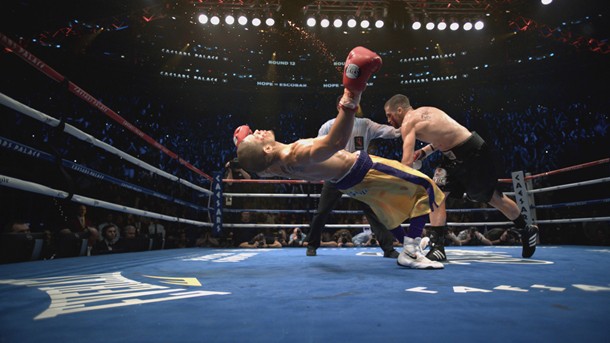
Antoine Fuqua’s Southpaw tells the story of Jake Gyllenhaal's Billy 'The Great' Hope and his struggles not only inside the boxing ring, but also facing his inner demons to win custody back of his daughter. The film exudes both grit and glamour -from the lavish lifestyle of a pro fighter, to the hardships he faces in his personal life - and Fuqua wanted to convey absolute reality. Aside from the typical underdog fighter turns boxing champ story, Fuqua wanted to present boxing in its raw form, causing viewers to feel every jab as if they were in the ring.
In order to pull this off, carefully crafted visual effects were needed to finish the job. Cue ZERO VFX, who provided the extra punch with stunning, invisible special effects. Co-founder and creative director of ZERO VFX, Sean Devereaux talks how all of the effects came together to deliver a knockout on-screen.
ProductionHUB: Why did you decide to shoot the boxing scenes round by round, in real time?
**Sean Devereaux: **That is something Antoine envisioned from our very first discussion about the script. He’s been boxing for years and it was important for him to present this sport that he loves in the most realistic way possible. I loved the intensity and realism it would bring but the technical challenges had my stomach doing somersaults.
PH: Didn't this take a toll on the actors? Did this add any benefits or setbacks to filming?
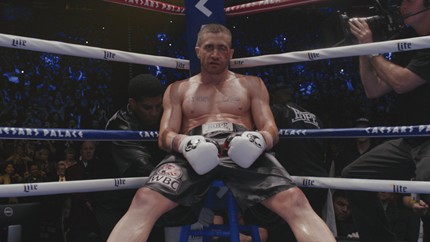
SD: It added immense pressure and in hindsight, I think that was the point. We didn’t fake anything. Jake had to box, not pretend to box. He had to get himself to a place both mentally and physically that allowed him to go three rounds straight and still remember his lines and choreography. It was an incredible performance to witness.
The benefits were twofold, the first is that we were able to shoot hours and hours of real time, character driven boxing action in less than two weeks and secondly that the performances were so authentic. No one was pretending to get tired, they were actually and devastatingly tired. Antoine took the short schedule we had and turned it into a strength.
The setbacks were mostly VFX driven. We had to create a CG stadium and fill it with 25,000 screaming fans but we had no benefit of tracking markers, blue screen or set up time to get all the camera data we would typically gather. We also had 5 different types of cameras rolling at any given time which made consistent solution nearly impossible to come up with.
PH: There is not a single blue or green screen used in the film. How challenging is it to not use one or have those specific angle limitations?
SD: It makes it easier and faster to shoot for production as we are not moving around bluescreens between each take but it certainly requires a lot more time in post as every single shot needed hours and hours of very accurate rotoscoping. This also allowed for the cameras to look anywhere they wanted. There were no limitations.
PH: Tell me a little about the LiDAR scans (what you used them for) and why you decided to use them?
SD: We always start from a place of reality and lidar scanning is another way to start from a real place. We never want to make something up or create something for the sake of creating it so we used Lidar to capture as much of the real arenas as we could.
On Southpaw, we also needed Lidar in order to be able to track the camera’s position. With no tracking markers and no way to predict camera movement, even witness cameras didn’t work, we needed accurate geometry to base our digital cameras on otherwise we would have never been able to align our digital world with the real world.
PH: Those punches were pretty intense in the film. What process did you have to go through to craft EACH punch and how much time and effort did that take?
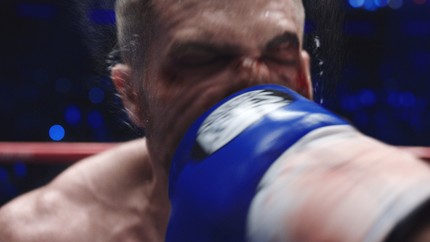
SD: Thank you! The punch work is something we are really proud of and Southpaw is the only film I know of where each punch connects, no unintentional misses. It is highly detailed and subtle work but it really ups the intensity in the final film.
We used a variety of techniques from 2D warping/puppetry of limbs to full CG replacements, each technique was chosen on a shot by shot basis. In many shots, heads had to be replaced as well, in most cases, to minimize the head movement so jabs wouldn’t impact like haymakers. This work was painstaking and we scrutinized every frame so that each contact was as realistic as possible.
PH: It must've felt great to see all of your efforts on the big screen. What were some of your favorite things that the audience may not have picked up on?
SD: Like many of our films, you never notice our work and that is what we are most proud of. We created over 45 minutes of visual effects for Southpaw with large portions of the frame being all digital but I don’t think anyone watching the film would be able to tell you what we did and that for me is always the best part.
PH: How pleased were you with the film in its final form?
SD: I truly love it! It was always a dream of mine to make a boxing film. Rocky is my favorite film of all time, so to be able to contribute to such a powerful passion project that really resonated with people was truly a dream come true.
PH: Anything else you'd like to add?
**SD:**A big thank you to Antoine Fuqua for letting us be a part of the team and to every artist and producer at ZERO for putting their all to give Southpaw the best boxing action ever seen on screen!
About Sean Devereaux

Sean Devereaux is co-founder and creative director of ZERO VFX. He has created visual effects in more than 50 feature films, including American Hustle, Transformers and Fury. He is passionate about story and helping artists and filmmakers harness their talents to create work that matters. He is a frequent speaker and has taught thousands of artists from around the globe the art of cinematic storytelling.