Written by Frank Wachowe, producer and owner, Lantern Creek Productions
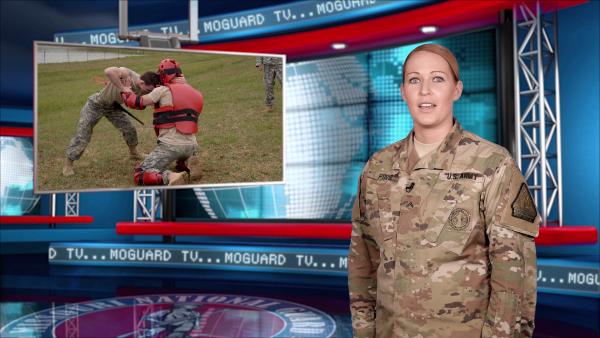
Lantern Creek Productions has wrapped up our final season producing “MO Guard TV." Over the past two years, we produced 24 episodes that covered the events, training, missions, and lives of Missouri National Guardsmen and their families.
The post-production of “MO Guard TV” posed many challenges for us initially, as we had never produced a half-hour, monthly TV show. There was a steep learning curve to say the least and as one of the show’s producers, I eventually realized the need for a quality control system for post-production.
My hope in writing this is that it helps to motivate those of you that don’t have one, to make the time to set one up.
The system would be made up of all of the components of the post-production process. Within them, there would be checklists made up of one sentence items that describe a procedure or task that needed to be completed to ensure quality control.
The act of creating a checklist, forces you to identify “mines” to be on the lookout for before entering the “minefield” of post-production. Once you’re in post-production, it helps you navigate, identify, and address components that were overlooked or that pop up; which will happen.
The ultimate goal of a checklist is to prevent, minimize and learn from mistakes made during post-production and to ensure a quality video product that positively represents the client - in our case, the Missouri National Guard.
One example from “MO Guard TV” of learning from a mistake was an issue that we had with “audio pops” on one of the early episode exports. These were caused by having audio clips in the timeline that didn’t have audio transitions applied to them.
To address this, we created the following checklist:
1) Highlight the appropriate audio channels
2) Set your play head at the beginning of the timeline
3) Apply the “next edit” keyboard short cut to move through the timeline and inspect every audio edit for a transition
With this new checklist in place, the video editor had the opportunity to prevent any future “audio pops." Without it, there is an increased risk that the video editor may forget to inspect the audio edits before exporting. The checklist serves as a reminder and identifies what items still need to be addressed and checked off the list.
The amount of components to be aware of during post-production can be overwhelming. A checklist can free a post-production team of having to juggle all these components in their head and instead address them individually by moving through the checklist items.
You can take a checklist too far though. There’s a thin line between a checklist that is thorough and one that is burdensome and breaks down the items to the molecular level. You have to figure out what is going to work best for your particular project by factoring in the workflow, deadlines, and how many team members you have.
One of the most challenging “mines” that we encountered was lower-third titles. This is a component that may sound simple, but it became a complex quality control problem.
We interviewed over four-hundred military personnel during two-seasons of “MO Guard TV” and some of these lower-third titles had mistakes. These mistakes would make it way down through the post-production pipeline, including: typos, missing ranks, the wrong rank or the wrong organization. The further down the pipeline that these little fellows made it, the harder it was to catch them before they could escape. Which unfortunately, a couple did.
Each lower-third title was composed of: name, rank, key leadership position, unit, and organization, along with all of the acronyms to help make the information fit. It took a collaborative effort to address this recurring problem. We had to identify holes in the workflow and determine where to add and modify the existing checklist.
Mistakes that help identify holes in your checklist are valuable assets that should not be wasted. Take that “lemon” of a mistake and make some lemonade out of it. You can drink it while you are adding it to your checklist. If you spill that lemonade on your laptop while you are doing this, be sure to add that to a new checklist as well. The point is: learn from your mistakes by adding or modifying them to a checklist.
If you have a post-production team, the checklists need to be a collaborative effort. Brainstorm together, make the most of your video editors who can share their perspective in the workflow, along with their lessons learned from previous projects.
Also, do your best to establish a team culture that understands the importance that everyone has in putting the checklists into practice and updating them. We utilized the Google Sheets version of Excel to create the checklists. This gave each post-production team member easy access to update and monitor progress.
It’s important to hold everyone accountable. If the team members are just “pencil whipping” the checklists, then they and the checklists are worthless to the team’s efforts. It requires team members that have the discipline and patience to keep the checklist alive along with the leadership to hold them accountable. The checklists are a living, breathing system that require time and energy from the post-production team or they will die, bringing your quality control system down with it.
As an episode moves through the production-timeline, mistakes that get through at critical stages force an interruption of the workflow and make it that much more challenging to meet the production’s deadlines. The checklists provide opportunities to catch quality control mistakes early on, hopefully before they go public.
Do yourself a solid, make the time to develop and maintain your own post-production quality control plan ASAP.
About Lantern Creek Productions We are a video production company located in the heart of the City of St. Louis, Missouri. Lantern Creek Productions provides our clients with the full potential that digital video offers in the information age, by riding the oncoming waves of digital media technology, social media, and mobile devices.