By Ray Roman
I never really planned on leaving my fulltime job to become a wedding cinematographer. I was working at a police department on the SWAT team when I entered the business, and I thought it was just going to be a hobby. Over time, however, I started booking more clients than I could handle, and I had to make the leap. I was obsessed with video production. My first lesson of advice to anyone pursuing a newfound passion while still working fulltime would be to take it slow. I never considered the backlog that was going to come with these jobs until it was too late, and although I loved every second of it, it was hard work for a novice. I had to work doubly hard to develop my craft.
I learned as much as I could about lighting and composition to help me get there. It is the foundation for good-looking imagery, and many people in the industry do not realize it. Basic fundamentals are key, not the latest gimbals, drones and sliders (even though drone shots are truly epic, but should only make up about 2% of any film – the other 98% of shots will rely on your own skill behind the camera). I cannot stress applying the basic fundamentals first enough. If you have great lighting and composition, it is going to be very difficult to make your shots look bad.
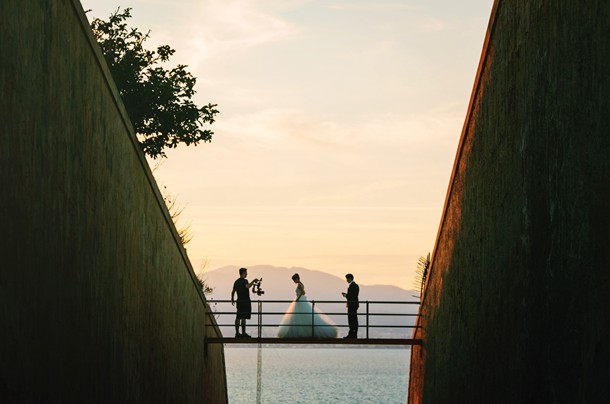
Wedding cinematography captures motion, sound and story. Being able to capture the emotional buildup to a first look, personal vows that tug at your heartstrings or that hilarious speech at the reception is what it is all about, and it is a lot different than photography. Could you imagine watching the Super Bowl in a photo album? There are so many more things cinematographers have to overcome – wind noise, airplanes, trains, interference, screaming babies – that can destroy audio. A film with bad audio is devastating to your product, yet most times you have no control over these interferences. Lighting is typically horrible. Photographers don’t worry about audio and can also use flash to adjust almost any lighting situation. Not to mention the 400 pounds of gear we have to lug around! A wedding cinematographer has a difficult job, but I have always found certain tricks to be immensely helpful in offsetting the obstacles.
Come prepared. Know your gear. Each wedding is unique and will present its own opportunities for you to flex your creative muscle and create a truly filmic look. But it’s also important to take steps to ensure your gear fully supports a cinematic look and your desired workflow before you even arrive at the venue. Look for cameras with high dynamic range, high-resolution sensors and open file formats, such as cameras from Blackmagic Design, which are affordable and easy to transport to both local and destination weddings.
Be passionate about your craft. Don’t be lazy. Do not become a predictable shooter. Do not shoot the obvious. Challenge yourself creatively, and never, ever take a basic, boring, predictable shot again. You should always find ways to make a basic shot unique. Don’t try and mimic others, and find a way to own the shot and make it your own. Your goal is to create a good cinematic look that brings a couple back to the moment, not one that looks unrealistic and video-heavy. If you have a limited contrast range or poor quality optics and lenses, your work will lack the high-end quality that should set you apart. Don’t let your gear work against you.
Again, master lighting and composition, and you’ll start to see huge improvements in your work. If you look at the top photographers in the world, the main difference in their work is how they see and use light. Their compositions are flawless. I’ve learned a ton from watching great photographers, and it has helped me to hone my shots to the level I want them to be.
However, remember that every photographer has numerous resources to outsource most of their postproduction, whereas wedding cinematographers do not. It is important to use good postproduction tools to tweak each shot, especially since there is limited time on the day of the wedding to capture the creative images they need for a good film. You can still tell a great story and make good use of the cinematic shots you captured on the wedding day with good edits in post. I use Blackmagic Design’s DaVinci Resolve color grading, editing and finishing software to quickly enhance cinematic looks that give my work that final touch, the final coat of polish necessary for a clean, beautiful look. I also make sure that on the day of, I am prepared with proper lighting gear for bad lighting situations and professional audio recording gear. As important as lighting and audio is for a production, this is the one area where cinematographers tend to invest the least amount of money. It could make all the difference.
Even through all of these challenges, make sure to never give up. You still have an obligation to the couple, even if an outdoor wedding turns stormy and you have to fight it to get the perfect shot. Always give 150% of your effort to turn even the most challenging situations into something special. If in the end, it just didn’t work out, just know that every wedding isn’t going to be a homerun. If you gave it your all and it just fell flat because of situations outside of your control, it is what it is. Just move on, and keep that knowledge close to your heart for the next time.
Wedding films are vital in documenting the little once-in-a-lifetime moments that make up a perfect day, and the challenges a cinematographer has to overcome to get there only adds another layer of beauty to it all. If you continue to learn from them as you strengthen your craft, your work will speak for itself.
About Ray Roman
 Ray Roman is widely considered one of the top wedding and event cinematographers in the world. Ray and his team routinely travel the globe documenting weddings for high profile clients and discerning couples, as well as numerous star athletes (most notably NBA All-Stars Chris Bosh and Rip Hamilton, along with NFL All-Pros DeMarco Murray, Brian Dawkins, Chris Hope and Devin Hester). Ray has been the official cinematographer for royal weddings, as well as the highly publicized $20 million redwood forest nuptials of social media mogul Sean Parker. Winners of countless International awards, Ray Roman Films has also been named one of the top 25 hottest and most influential studios on the planet by EventDV Magazine.