by Katie Barclay
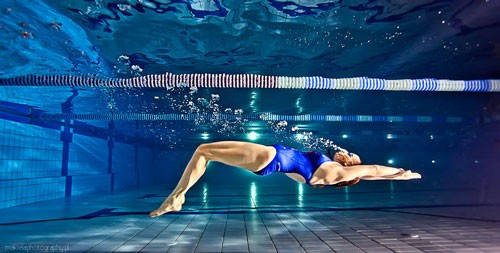
Sports photography has a reputation for requiring a diverse set of skills. Not only do you need to be able to shoot in unpredictable lighting, you also need to be able to know how to capture fast-moving objects in a clear and concise way. In other words, you really need to be an artist to be able to be successful with sports photography.
When you talk to a sports photographer, they will always tell you to shoot tight, crop tighter. But unless you are real shutterbug, then you will have no idea what that means. In order to understand the mind of a sports photographer, we first must understand the challenges the sports photographer faces and how they conquer those challenges.
*** Shoot Tight**
The art of sports photography is about the competition between human beings. That is why all sports photographers do their best to shoot tight on instances that will make history. When the field goal kicker lines up the ball to kick the winning field goal, the photographer must choose which subject to shoot. Will it be the ball going through the uprights, the expression on the face of the kicker if he misses, or the coach when the ball sails through to miss the game?
Without knowing the outcome of a sports moment, a photographer has to zero in on what they feel will be the key element of the story. As long as the picture comes out clean, the rest can be done with editing.
*** Crop Tighter**
A sports photographer taking pictures of a volleyball event can shoot tight on a ball as it races past a player and out of bounds. To the average fan, that is a standard play. But on film, it can be a great opportunity.
When a sports photographer shoots tight, the option to crop tighter on an interesting element of the picture can present itself. In our volleyball example, the crop could be of the pained expression on the player's face as they reach for the ball, or of molten volleyballs as they screech across the out of bounds line. Because the initial shot was taken at an expert angle, the photographer can choose the final shot that will have the greatest impact.
*** Lighting Is The Key**
Good lighting means good pictures. Even in the age of digital photography, it still takes excellent lighting to be able to get a clear image. Professionals who regularly cover sports events have to become very familiar with their equipment. There is no time to check a light gauge and no time to get the perfect spotlight on the hockey player as he scores the winning goal.
Hockey arenas used to employ strobe lights to offer photographers the chance to get good, clear images. But there was no guarantee that the strobes would go off when something interesting was happening. For a sports photographer, learning how to utilize available lighting is a critical skill. It helps to know your equipment and know how to get the most out of it. But a lot of it is just good timing and knowing the sport you are covering.
**
- It Is All About The Moment**
Some of the greatest sports pictures in history display very little movement. Pictures of players holding championship trophies, or that famous picture of Babe Ruth as he retires from the game of baseball do not normally require a great deal of skill to capture.
That is why sports photography is an art form and not a science. It is art to be able to capture that perfect moment in such a way that you can crop out everything else and just leave the magic for people to enjoy. It is art to have the instinct to point your camera at a play just as the pivotal moment of a game is developing. As long as you have a deeply-ingrained sense of what your equipment can do, then capturing the moment becomes the important part of sports photography.
With sports photography, it can be difficult to tell exactly what you are capturing. You should know the sport well enough to have a sense of when you need to point your camera in a particular direction and snap the picture. Shoot as tight as you can and be prepared to crop even tighter to get that final shot. Your final product will be more than just a picture. It will be a memory etched in time that people will be able to enjoy for generations to come.
About Katie Barclay
 Katie Barclay is an expert photographer from Portland, ME, where she earned her degree from Maine College of Art. She has a variety of photography experience, which has helped her to develop a deeper understanding of the challenges to capturing the perfect shot. Her passions include culture, history, and teaching.
image courtesy of: *Naldzgraphics.net *