It is not uncommon for Jim Oltersdorf to be hanging out of an airplane 10,000 feet above the wilderness to capture a front cover shot or feature story for a national magazine. Specializing in high-risk and extreme imagery, Oltersdorf is known internationally for his portfolio of award-winning footage and still photography, an accumulation of over 44 years of dangerous work.

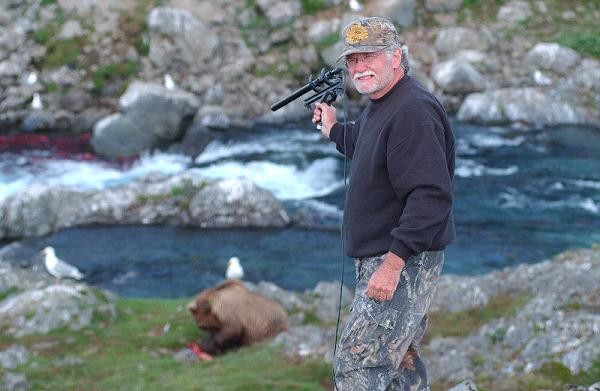
“You have to go to extraordinary areas to get extraordinary imagery,” he says. And he has. From piloting airplanes in the world’s highest altitudes to deep sea ocean diving into the world’s lowest, Oltersdorf has quite literally gone to the ends of the earth to show the public the most intricate parts of our ecosystem. His adventures were featured on Discovery Channel’s hour-long presentation “Risk Takers 2: High-Risk Photographer Jim Oltersdorf,” and more recently, on an episode of the History Channel’s “MonsterQuest,” titled “Giant Bear Attack.” He works extensively with the brown bears that roam the wilderness of Alaska, his home state.
“Every day, there are 8-foot bears looking into my window – it’s a little different than metropolitan areas,” he laughs. “The equipment that I use while working has to be fail-safe, anything from my shoes to a gun I carry; if it doesn’t work, I can die.”
Oltersdorf began using ProAm cranes five years ago, and he says he plans on using them for the next 50. “What I find with the ProAm cranes is that it allows the viewer a very different perspective, because we can go to various lengths from ground level to sweeping vertical motions up high, from one inch to 12 feet, instantaneously.” Jim reports, “I’ve never been dissatisfied or let down because of improper engineering on these cranes. It’s something we beat the living hell out of on set. If it will withstand the rigors of Alaska’s extreme environment and harsh weather, it will be a cake walk to use just about anywhere else.”
The environment Jim shoots in is so extreme that planes can only fly about 300 miles into the remote Alaskan woods; the last few miles must be traveled on foot, and equipment must be carried by hand. The plane is then flown out to keep the bears from eating it, and from that point forward, the crew is on their own for weeks with no communication to the outside world, surrounded by anywhere between 25 and 35 giant Alaskan brown bears a day.
On one occasion, Oltersdorf took a crane a couple of miles down the salmon stream to film. After shooting, he hid it in the bushes. When he came back the next day to continue working, he found the 12-foot crane where he left it – with all the rubber grips chewed off. However, the crane’s metal frame had resisted the strength of the bear’s insatiable curiosity. The crew continued to use the crane throughout the week they were there, bear-chewed and all.

“The equipment we use has to be durable, wear-resistant, but most things don’t survive a bear messing with it,” says Oltersdorf. “The fact that it did survive, and that it continued to work just as well for us, is a strong statement.”
In Alaska, it is very costly to haul anything, as most transportation is done via air craft. This limits the size, weight and length of the equipment Oltersdorf can use during his shoots. ProAm’s component system, which enables the cranes to break down into lightweight 4-foot sections, allows him to fly his equipment to the toughest locations.
“The idea that these things are very simple to put together and utilize within a matter of minutes is vital,” he says. “Especially in nature photography and extreme high risk work, the equipment has to be easy to set up. A blink of an eye, and we’ve just lost a shot if we’re screwing around with nuts and bolts. The very complicated items offered for sale by other retailers? That’s not the product I want.”
Jim Oltersdorf is currently on assignment in Alaska producing a PBS special about Alaskan bush pilots. In the near future, he will take on a photography project in Russia, a three-month stint in the outback of Australia to post produce one documentary and to executive produce and shoot another, and another Alaskan project in the fall to film underwater salmon spawning.
For more information, please visit his official website: http://www.joltersdorf.com/.