If you are an indie filmmaker then you know that casting is that wildcard that can make or break your chances at festivals, awards, and making all of your hard work worth it, and that mis-casting can make your shoot a living hell. The breakdown is the fateful first step in the casting process. As an actor I have personally read somewhere near 15,000 breakdowns in my career, and, when I was self represented - I read and applied to the worst of the worst - and paid the price for booking them in the end. Over the years, I’ve combined a list of dos and donts I wish every filmmaker knew in hopes that we can all be the change we wish to see in the breakdowns.
Do: Sell the project and the people involved.
Those of us who are working steadily become very selective about what we will submit for, and, particularly if you are asking actors to work for a deferred, or below scale rate, you will need to let them know just how great the team you’ve assembled are.
Do: Provide links to director’s reels, project websites, IMDb, twitter handles etc.
You may also want to include the DP’s reel, IMDb and credits, and make mention of other actors who’ve already been cast, or awards anyone has won. I also feel more confident if I see that the director, producer or DP’s work has appeared in film festivals. This is also a great chance to start building a fanbase for your project as many of the actors check out the links you list. Please do let us know what your intentions are for the film - such as submitting to festivals, or using it for a funding campaign.
Do: Use the character descriptions and the plot synopsis to provide extra character information to the actors that may not be in the script.
Casting should not be about testing the actors to see if they can read between the lines - arm them with as much information as you can about the project and you will get better reads. Actors are trained to read between the lines, yes, but any extra bits you can add about backstory or character motivation are helpful to get us all on the same page and can save you time in the room.
Don’t: Use cliches in your breakdowns.
Even if the character is a walking cliche you can still give her or him a little something extra. For example: ‘Hot model girl’ can easily be ‘Attractive College Co-ed out for a girl’s night.’ It just feels like you care more about the character (even if it is a small role), and the actors will therefore care more about it too.
Don’t: Specify ethnicity or gender unless it is necessary for the role.
Be open. Because it is 2016. You never know what kind of fantastic take someone from a different ethnicity or gender will add to the role you just stuck in the script for the sake of story. Not all cops are men, not all couples are straight, not all IT guys are Indian (or guys!). You have the opportunity to make significant change happen in our industry by shifting this one little thing. The world thanks you in advance!
Don’t: Waste everyone’s time with copious amounts of sides.
I spend at least an hour preparing for nearly every audition I attend - those with longer sides can take even longer. I memorize all of my dialogue before I go in for an audition so if you give me 10 pages of sides i am spending a significant amount of time on that material. Use a couple of contrasting, shorter scenes during a first call and then ask for more scenes to be prepared at the call back.
Do: Research actor’s work before calling them in.
It is really wonderful when you go into a room and the director or casting director tells you they have seen your reel, or the work you did in some other project and enjoyed it. Even the most experienced of us get nervous in a casting room and knowing we are not just another 5’4” redhead helps to bolster our confidence.
Do: Post breakdowns on at least one free site (even if it is on your Facebook page or website) so actors who can’t afford to be on the paid sites can still audition.
Many of these online casting sites make their money off of actors, and even the ones that let you submit for free will still try to get actors to pay to have their applications pushed to the top of the pile. It’s a grind - especially for actors without an agent - so do them a favor and make sure they can still find the information on your project through a google search when they find it on other sites.
Do: Look at other postings on the casting site you are using to get an idea of what goes where and what makes you want to click on a project. i.e. . . .
Don’t: Write ‘hot models and actresses needed for short film’ as the title of your project.
Please.
Don’t: Do open calls.
Open calls are terrible for everyone. When I am very busy and I get a mass email for an audition that tells me I need to be at a casting location anytime between 3-7PM I usually won’t go. This is a rookie mistake made by new filmmakers and it makes everyone’s lives miserable. Long wait times and degradation at being one of 37 5’4” redheads wearing a green blouse doesn’t give you your best reads from actors. Instead of spending 10 hours seeing everyone who submitted, and being so overwhelmed with faces that you can’t remember who’s who by the end of it and then having to re-watch ten hours of the auditions you taped - take 4 hours to review reels and resumes and then spend 3 hours auditioning your top 12. The actors will appreciate that you respect their time and know their work and you will enjoy the process much more.
Don’t: Ask us to do scenes involving fighting or physical violence.
Proper fight choreography and rehearsal is required as a safety precaution and the audition room is not a fair place to begin this process. If you would like to have a fight audition for roles which require it, hire a fight coordinator and hold it in a proper facility with mats.
For 8 more pages of helpful casting tips from an actor’s perspective visit: www.mandymaycheetham.com/shop where I go through the entire process of casting actors from Breakdown to Booking (and even some on-set tips and definitions).
About the Writer
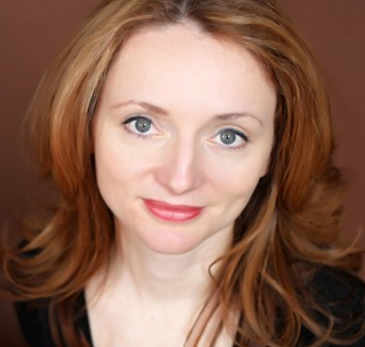
Mandy May Cheetham is a Canadian actor trained in New York and Los Angeles who has completed over 60 projects in 5 years in film, theatre, and television. She is the creator and star of MUTHA a television show soon to air on a major U.S. network. She is also co-creator of a web series on the experience of casting director workshops from an actor’s point of view called The Infinite Need see all ten episodes here.