Nick Heil, author of Dark Summit: The True Story of Everest's Most Controversial Season, discusses how the filmmakers for the film, Everest, in theaters on September 18th, set out to recreate the events of May 10, 1996, the challenges to film action scenes for actors Jake Gyllenhal, Josh Brolin and Jason Clarke and their experiences on set.
**Q: **What made you decide to write Dark Summit: The True Story of Everest's Most Controversial Season?
Nick Heil: I crashed a magazine article (for Men’s Journal) during the summer of 2006, which investigated the circumstances of the 2006 climbing season on Everest, in particular a controversial incident in which a man was left to die near the summit. I felt the 4,500-word article only began to scratch the surface of a story that had many more details, characters, and action than we had room for in the magazine piece. I became obsessed with telling this story in full detail. This obsession led to a book proposal and, eventually, Dark Summit.
Q: How much time/research went into writing it?
Nick Heil: Just shy of two years, including 2 months in Nepal and on Everest in 2007.
Q: In the making of a film like Everest, set to release September 18th, what are some of the struggles to stick to/portray actual events?
Nick Heil: The events of May 10, 1996—on which the movie Everest is based—involved dozens of people and were spread across a large portion of the mountain. It was a complex mosaic of problems, with some climbers trapped up high, others attempting to reach the safety of the high camps, and still others on lower sections of the mountain trying to understand what was happening where, and how they might help. Shaping this into a clear narrative that works on the big screen in 90 minutes or so was probably the most challenging issue for the filmmakers.
Q: In your opinion, how accurate is the portrayal of events in Everest? Why?
Nick Heil: It’s fairly accurate in terms of the primary events—who was trapped, who died, where, and why—as far as those event have been retold in various survivors' accounts. Some liberties are taken to compress the action, or introduce details that do in fact happen on Everest, but didn't necessarily happen to the climbers during the spring of ‘96. For example, there’s a scene in which a large chunk of the Khumbu ice fall calves off while Beck Weathers, played by Josh Brolin, is attempting to cross a rickety ladder, almost sending him into a crevasse. I don’t believe this actually happened to him in the Khumbu, though such things are not uncommon in the ice fall.
Q: What are some of the challenges that occurred when the actors were trying to recreate climbing scenes?
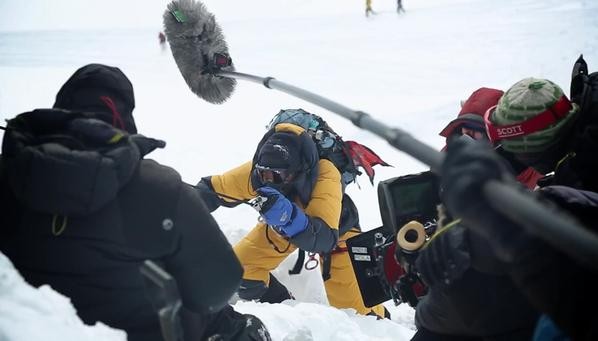
Nick Heil: On the sound stage in London, they blew salt across the set and into the actors’ faces. Jake Gyllenhaal said he was blinded for hours because of this. On location in Nepal and the Italian Dolomites, they had to deal with altitude up to 15,000 feet, extreme cold, and 12 hour days shooting in high winds and, at times, on avalanche prone slopes. Despite the difficulties, I think the actors, at least the ones I spoke with, had a grand time and really enjoyed it. I don’t think many film projects are quite as adventurous.
Q: What did the actors have to experience in order to get into their characters?
Nick Heil: They were impressively well-read on Everest history, as well as mountaineering in general. I know that Jake Gyllenhaal, Josh Brolin, and Jason Clarke all spent a fair amount of time training outdoors and getting in top shape for the film. Some of them spent time in altitude chambers that simulated elevation up to 30,000 feet, about the height of Everest. I also know Brolin spent time corresponding with Beck Weathers to learn more about him and glean further details of the events of ‘96 from a survivor’s perspective.
Main image courtesy of: https://twitter.com/firstshowing/status/608382585467731968
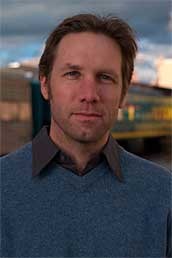
Nick Heil image courtesy of: http://nickheil.com/.