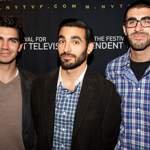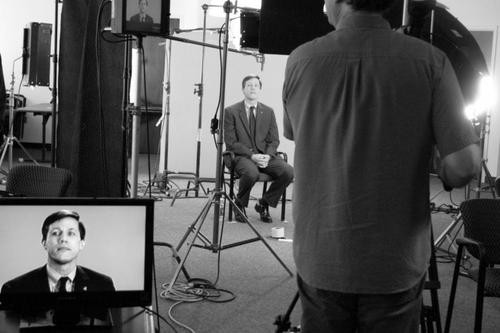
Kinetic Media believe it’s OK to brag a bit when hard work is recognized, and we agree! (Plus, having an Emmy statue sitting in their office is definitely worth a few bragging rights.) Learn the importance of story telling & making your production company flourish while discovering production trends from experts who know how to get the creative juices running, while snagging an Emmy while they’re at it.
**Q: Tell us a little bit about your company and what sets you apart from the rest. **
A: A lot of video companies focus on the technology and the glitz. We’re all about the script and the content. We spend a lot of the time in preproduction with our clients, carefully crafting the script and style that will convey their message accurately and powerfully. All the graphics and special effects in the world are useless if your message isn’t strong, clear and persuasive.
We’re based in Hartford, CT, although we work everywhere. We’ve been producing corporate video, educational programs and documentaries for more than 20 years. We’re a pretty nimble company. There are just three of us and we hire freelancers to fit each individual project. That way, we can assemble the best possible team for each project – keeping the quality high and our overhead low.
Q: What is the importance of storytelling?
A: As soon as we get an assignment, we begin looking for the story. There always is one; sometimes you just have to look. When people are watching television or reading a book, they want to know what’s going to happen. If nothing happens, they won’t stay interested and they won’t remember what you’ve told them. Corporate video is no different. If it’s a new product, how did the idea develop? If it’s some new software, let’s find a user who will discover the benefits. It’s really all about the story.
Q: You seem to incorporate problem solving into your client consultations before brainstorms ever begin. So important and under-utilized for corporate video production. Can you give us a sneak peek into how that started, how it has evolved and how it’s helped your video production company flourish?
A: The quick answer is we watch a lot of television! We can’t believe it when people in our business say they don’t watch TV. We’re always looking for new ways to tell a story or shoot a scene or incorporate graphics. Then, when we take on a project we have a treasure trove of ideas we can draw on as we begin to develop the approach. So, one problem might be that the client’s product is just not visual. Our solution might be based on a commercial we’ve seen. A typical problem is that the client’s budget is inadequate for what they want to do. We’ve been particularly successful in coming up with creative ways of getting the same message across – at a lower cost.

**Q: Is there a recent high profile company you’d like to use as an example of the process? **
A: We recently completed a series of vocabulary videos for Sadlier, a well-known textbook publisher. Sadlier wanted to create 900 short videos to illustrate each word in their vocabulary textbook. Each had to have its own unique idea that would help kids understand the word. Of course, the time frame was short and the budget limited. So we came up with the ideas and developed the scripts by picking the brains of kids in informal focus groups of kids (and buying them pizza and soda). We then partnered with a local children’s theater for the production. We had some great skit ideas that were well-executed by the young performers and we were able to shoot dozens in a day. It was a great example of pre-production planning and creativity that really paid off.
Q: What trends in video production do you see for this year and next, especially as it applies to the corporate client realm?
A: The trend is definitely toward short, focused videos that can be used in a variety of ways – on web sites, as meeting openers or incorporated into email blasts. We’re now working with clients who want to develop libraries of short videos that can be accessed as the need arises. Another trend –is the decreasing cost of equipment. That means that we can focus more resources where they belong – in the people who develop the script, get the right shots, create the perfect graphics and then put it all together.
Rosemary O’Neill has been president of Kinetic Media for the past 22 years, managing the business and handling script writing. She is a former reporter for the Hartford Courant and she spent several years in media relations and employee communications for both Travelers and Aetna.

images and content courtesy of: Kinetic Media