In the production industry, if you’re not proactively trying to stay ahead of the changes in technology and production styles, you risk being left behind. While there’s certainly value and credence given to those who know and understand the basics, real creative muscle is stretched when you take chances and explore styles that are unfamiliar territory.
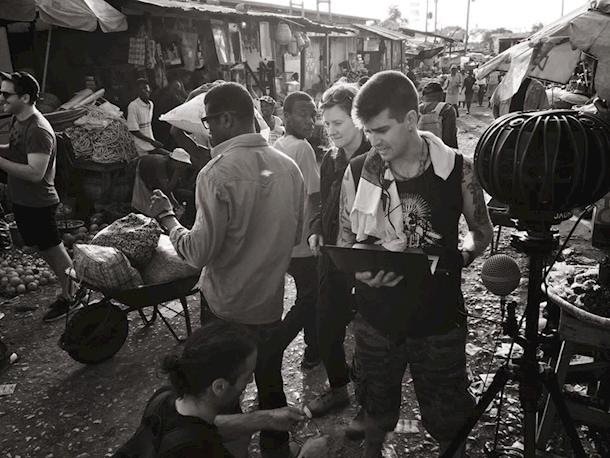
In the world of Virtual Reality (VR) and 360 filmmaking, many production pros are walking somewhat blindly into the process. The equipment is new and constantly changing; blocking and staging have to be completely rethought; and storyboarding takes on an entirely new life of its own. About a year-and- a-half ago, the team at 30 Ninjas wanted to become more involved in the world of 360 filmmaking; thus, the idea for the VR mini-series "Invisible" was born.
ProductionHUB recently caught up with 30 Ninjas’ Julina Tatlock, Founder, CEO and Creative Director, as well as Lewis Smithingham, President of VR, to discuss some of the challenges, process nuances, and equipment necessary for developing and producing a start-to- finish immersive filmmaking project.
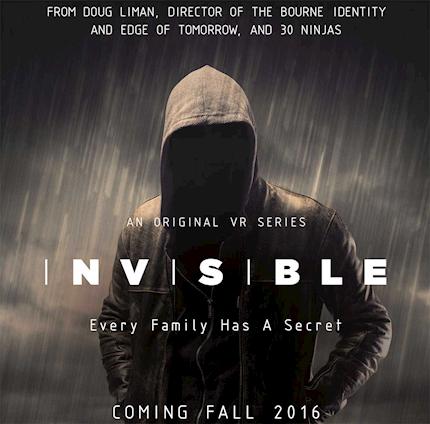
“Invisible” is the first major scripted series designed specifically for 360-degree virtual reality. Conceptualizing, storyboarding, testing, producing, and editing it was a challenge like none other.
“While you do need draw from your past experience, it’s important not to rest on your laurels. When you consider the basics of producing a compelling series, and add the many varied elements involved in creating a 360 production, it can sometimes feel overwhelming. In a 360 production, you are allowed so much flexibility to experiment, and you can get really creative in a medium that is constantly evolving,” said Tatlock.
Smithingham added that he took VR and metaphysics expert Michael Heim’s “Four I’s” into consideration before producing the five-episode series: immersion, immensity, intensity, and interactivity. And while it’s important to consider these elements at every turn, there are certain challenges involved in VR filmmaking that the “Invisible” crew had to overcome.
“Producing in VR is incredibly complex, and adds a new level of technicality that most producers are not used to,” Smithingham stated. “But the challenge is why we do this. We’re learning from others who have blazed the trails, and we’re also becoming more comfortable flexing our own creative muscles and trying things that we never could have imagined.”
The process involved in even getting the project off the ground was a bit different, too. For instance, there was a great deal of testing and experimentation at the beginning. Before even considering the project in pre-production, the crew shot five pages of scenes and tried a variety of angles and tactics with each of those scenes to determine if it was even possible to bring their vision to reality.
“Once we knew we were onto something, we were able to engage partners and gain traction and support for the project,” added Tatlock.
That support came from production partners Condé Nast Entertainment (CNÉ), Jaunt, Samsung Electronics America, Inc., and Lexus.
Another challenge the “Invisible” crew faced was the very real problem of attempting to edit a huge project without having a software program in which to make real-time edits in headset. Smithingham found himself enslaved to the long process involved in taking edit requests from others on the production team after they viewed takes in a headset, only to have to wait for the film to be stitched, ingested to an editing program, edited, rendered, exported and then revisited in the headset, where the whole process would start over again.
“It was laborious and quite frankly, it was one of my biggest production fears realized,” added Smithingham. “I talked to Chris Bobotis at Mettle, a friend in the industry, about these huge hurdles we had to overcome and he developed what I can only describe as a life-saving tool for editing in real-time: Mettle SkyBox for Adobe’s Premiere Pro. It was really a game-changer for our project; it saved us so much time.”
Beyond Mettle, Smithingham chuckled as he thought back to all of the other tools and resources used throughout the duration of the project.
“What didn’t we use?” he asked. “To complete a project like this, you basically find and use every tool and resource at your disposal. From Autopano to Dolby Atmos to Raspberry Pi to structure sensors to custom monopods from Nodal Ninja to the Dell Precision 7910 to one-of- a-kind Freedom360 mounts to lasers and compasses and everything in between, if we could use it to for the betterment of our production, we did.”
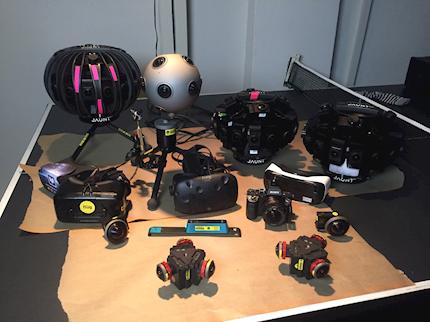
Additional tools and resources used in the production included the Adobe Creative Suite, Assimilate Scratch, 125TB of OWC Raids, NVIDIA cards, Intel Chipsets, Vegan Jerky, bent paperclips, and Samsung S7 phones.
Tatlock added, “One of the additional challenges of producing a VR series is that the technology is constantly evolving. When we first conceptualized this, Google Jump had not yet come out. Sony PlayStation VR was not on the scene. Nokia OZO was still in Beta. The NVIDIA 1080 didn’t exist. As a result, 30 Ninjas has made a commitment to be technology agnostic, because you constantly have to be prepared to adapt.”
Beyond the challenges, both Tatlock and Smithingham agreed filmmaking in a new medium was a project they’d willingly take on again, and definitely will.
“The community of support for those who are just starting out in VR and 360 video production is unbelievable, and the resources – even free and low-budget resources for those who want to play around with concepts before investing too much – are there,” Tatlock added. “I’d encourage anyone who has even a small bit of interest in this space to explore. Don’t let what’s been done in the past hamper your creativity because the sky’s the limit in this industry. Who knows? You could be developing the next VR innovation that we’ll all be using 10 years from now.”