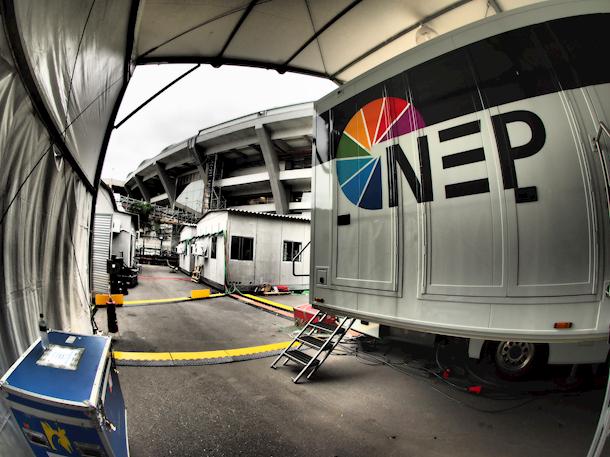
Ok, so let's start off slow so you can (maybe) wrap your mind around just how much time, money, (1.23 billion paid in rights fees alone in the U.S.) equipment, and logistics, go into this awesome spectacle called the 2016 Rio Olympics. But before we can move forward let's go backwards just for a second so one can understand and compare the scope of the production. Let's say you’ve been asked to produce a local college basketball game. Maybe six to eight weeks out. No problem. One or two production trucks, maybe eight or 10 cameras, gfx, transmission, audio, just one venue.
Get it? Pretty straightforward stuff, right? Now take that simple production concept and multiply it by a kazillion. Ok, not that much but let's just say a lot. Years of pre-production in the making. When Jim Bell, Executive Producer of the Olympics for NBC was asked how many production personnel were involved, he stated that NBC alone will have a thousand people in Stamford CT stateside and 2000 production personnel on the ground in Rio. That's not even counting all the production personnel from the OBS (Olympic Broadcasting Services), the production arm of the IOC (International Olympic Committee), and the dozens of other broadcasters from their respective countries but wait, that is just the warm up. Here comes the mind warp production value(s) wise to end all mind warps.
Not Using the KISS Principal (at all)
Remember when I started off with that simple mobile production model a few minutes ago? Well yes that was me, thinking I was killing it with a whopping eight cameras and wait for it...slow mo replay…Ha!
Imagine this instead. Roll out over a thousand cameras. Yes, that's correct and not a typo. A thousand cameras to be deployed by OBS, NBC and others shooting everything in sight and then some. Are you kidding me? Wow. Ok. Covering multiple locations, stand ups, wrap ups, sit downs, tears, joy, medal presentations, and yes that absolutely stunning Opening Ceremony which I thought was pretty cool all by itself. In total, approximately 7000 hours plus of just HD alone. Staggering. But hey, why stop now? Before we get behind the scenes let's just look at some of the other numbers: 37 separate venues that need coverage. 306 total athletic competitions. There will be some 200 countries broadcasting the games. That's so many numbers it’s making my brain fall out.
Escaping the Numbers (for a minute)
But before we move on, and before us production types fall off the edge getting gaga about the numbers let's hit pause to think about what the Olympics mean from a philosophical and storytelling point of view. That's what we do right? Jim Bell, Executive Producer of the Olympics for NBC had some really enlighting things to say about NBC's involvement and the approach they took as the Olympics drew closer to the Opening Ceremony.
‘We fortunately have enormously talented people within our organization, but just as important, when it comes to the amount of programming we're talking about with OBS, Olympic Broadcasting Services, which is the IOC's broadcasting arm that comes and really we do everything. We work very closely with them. They are wonderful partners. And the quality of their production, the people they're hiring, the gear they're using is of the highest quality. So it affords us the ability to do things like have a thousand people working on these Olympics back in Stamford. Knowing that the pictures and sounds that are going back there so that we have some announcers calling it off a monitor there, the viewer at home or the viewer streaming it online will still have a great experience as they consume the Olympics in some fashion."
Bell goes on to add this about the story telling part of the production process.
“Storytelling is still at the core of everything we do. I think in primetime especially because you're introducing the audience to athletes that most of the audience doesn't know and they're trying to watch sports that, outside of the Olympics, they never watch.”
Bell continues, "So it's a tall order to connect the audience with what's going on. The audience comes usually willing and hoping to have that. It's not simply a sports event. It's a human event. They want a little bit of the story line that goes into it. On cable, it's still story driven, but cable is a lot more long-form sports, a lot of Team USA sports on the NBC Sports Network, for example. But you're still going to see producers, even if they may not have the resources -- like if you were the basketball producer, you basically have one camera at your disposal, and your game's are all on NBCSN. So you're going to try to use that camera as best you can to shoot some parent in the stands and try to figure out when to cut that into the world feed.”
Bell concludes” What's changed also I think is the time that people are willing to invest in those stories. I think we have got to do more storytelling in a shorter time. So in the past you might have four minutes to play a lovingly crafted, produced piece of television to say here's this guy's story. That's a long time for people. They get a little itchy. So a lot of times that can be done in a piece that's maybe 90 seconds or two minutes. Or it can be done simply with the announcer and the analyst cutting away to a family member in the stands and telling some anecdote that means something to the audience.”
Unprecedented Production Technology Starts with the Olympics
As 2016 Rio Olympic story unfolds, one thing became crystal clear. If there is a new technology or distribution model to be had that will increase viewership, OBS is right there along with a host of other broadcasters to make it happen. There is no bigger stage, no bigger place to experiment with the technology that will at some point (if it hasn’t already) become second nature to viewers around the world. My new favorite?
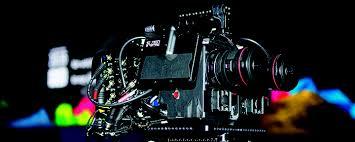
*Photo courtesy of Google *
Check it out. NHK rolls out 8K in a big way for the Olympics. 8K. Even though there is no mechanism for 8K home delivery yet, NHK is going full steam ahead. NHK has even set up special public viewing venues in Japan can get a taste of the future. But as with any new technology an entirely new infrastructure including switchers, monitors, and cameras will have to be built out. So 8K might be a stretch for a while since we are just at the edge of full HD and 4K in some parts of the world. There are still more places than not that still broadcast in SD. But that being said just look at these ridiculous (in a good way) specs. 8K SHV resolution (7,680 x 4,320 pixels) is 16 times the resolution of High Definition (1920 x 1080). Ultimately, OBS will provide approximately 130 hours of live 8K SHV coverage from the Opening and Closing Ceremonies, Swimming, Judo, Athletics, Basketball and Football. In addition, an ENG camera crew will capture select sports at other venues, highlighting the Olympic spirit and atmosphere of the Games.
It’s enough to make any tech geek drool. The imaging of 8K that I witnessed at NAB this year makes me think that this very well might be the future of television, the question might be how long till a full roll out. It's been said that NHK is hoping for a full roll out of 8K in time for the 2020 Olympic Games to be hosted in Tokyo, Japan.
Additionally, OBS has expanded not only broadcast capabilities but also other technologies as well such as the Olympic Video Player. (OVP) is an advanced multi-platform video player designed to enhance and compliment the enjoyment of the Olympic viewing experience.
According to the OBS, new devices and platforms have dramatically altered the way people behave and connect all over the world. The Sochi 2014 Olympic Winter Games made it clear that we stand on the profound change in how viewers consume content from the Olympic Games, with a significant increase in video consumption across multiple devices. With digital coverage (60,000+ hours) exceeding linear TV coverage (48,000+ hours) for the first time, the Sochi Games confirmed that overall online viewership is increasing significantly.
In response to this new digital era, OBS has been developing further its second screen offering and will deliver an enhanced version of the OVP for the Rio 2016 Olympic Games, including access to more content and data.
For the first time in the Olympic Games broadcasting history, viewers from around the world will be able to enjoy the excitement of the Games in high-def Virtual Reality (VR), providing a truly unique viewing experience.
Following a first successful test of a 180-degree VR experience at the Lillehammer 2016 Winter Youth Olympic Games, OBS will continue exploring VR possibilities in Rio. Using a compatible headset, viewers will be virtually transported to the heart of the Olympic action with VR coverage including the Opening and Closing Ceremonies and one key event per day.

*Photo courtesy of Google *
Olympic content will be available live through VR technologies, but also as Video on Demand (VOD). Highlights of 360-degree- video content will also be available, without the need for VR headsets.
Changing the Viewing Rules of the Game(s)
According to Christina Settimi of Forbes.com, 85% of Olympic viewers with online access will use a smartphone or tablet as a second viewing screen. I have no doubt that this number may even be a little low. A big part of that trend is the development of a bigger (as in choices) and better viewing experience for the audience. The updated viewing experience is nothing short of fantastic. This new and improved model includes traditional broadcast, cable, on line, streaming VOD and VR. This new model immerses the viewer in endless choices: Live, delayed, highlights, results, and medal counts. The smartphone might be one of the best viewing tools yet. I have been using the NBCOlympic app and it is quite impressive. But in a nod to NBC, they have upped the anty in their online presence.

Photo courtesy of Nicholas Romano
Jim Bell Executive Producer states, “I think the world is evolving in terms of our audience's ability to consume and understand these technologies. I'm hopeful that whether it's on our website at http://NBCOlympics.com or using the Olympic app, things will be fairly intuitive. I know that four years ago in London we were very proud/nervous that we decided to stream all the coverage live. Three years later and you're seeing now people who have Hulu and they have Netflix, and they have HBO GO, and they've gotten more comfortable around it. In Sochi we had virtually no complaints as people have gotten more educated about it, how to interface with the coverage from device to device, how to authenticate, how to stream. So I'm hoping that trend continues as we continue to offer it on more platforms. The research from London continues as well, which is that people who were willing to have all these devices on watching the Olympics, actually watched more Olympics on television than people who just watched the Olympics on television. That sort of marked them as Super Fans, and we'd like to see their ranks grow."
Technology and the Olympics: A Match Made In Heaven
Famed communications guru and futurist Marshall McLuhann once said “The Medium is the Message” and never has that been more evident than at the 2016 Rio Olympics. From the very first day of planning to when the Olympic torch goes dark, the Rio Olympics will be noted for the carefully crafted almost seamless coverage, and huge leaps in technology provided by NBC here in the US and the OBS and partner broadcasters elsewhere. These Olympics also herald a changing of the guard. Gone are the days waiting to see what will or won’t be televised and whether it will be live or taped. (I know I said tape) Even tonight as I write, I am (not kidding) at the same time trying to watch the Olympic broadcast and watching the handball highlights on my phone on the NBC Sports App. Oh and got two emails and a tweet and, well you get it. But here are the two technology wild cards. Virtual Reality (VR). What does the future of technology look like when it relates to VR? It is an amazing technology with so much upturn. But can it turn enough heads and pocketbooks to become an everyday technology or is it a just a passing fad? I think the jury is still out, but after seeing what Apple did with the culture changing iPad, I don't take any technology for granted. Ultimately it will be up to the home consumer to see if this one sticks. The other wildcard? No not streaming. The ability to watch anywhere/anytime is a done deal.
Simply stated, I am enamored with everything online delivery has to offer. So the other wild card has to be 8K. Can NHK and others make it happen? I think very much so. The only question is the timetable and especially here in the US how would 8K get presented? My guess as with other high end technology there will be the early adopters, followed by the more cautious adopters, followed by the late to the party crow. But they will come around whether they want to or not.
Closing Thoughts
The Olympic games are an amazing test bed for new technologies, yet all of these technologies are just that. We should remember that no matter what part of the production chain you exist in, we are all storytellers. Jim Bell from NBC summed it up so well when I asked him this question about the future of VR.
“Look, as just one guy, the technology will drive that discussion moving forward. I think it seems like a cool thing, but where it stands right now with the goggles and you've got to put this thing on your head, it's not there yet. I kind of like the experience of watching big events like the Olympics on a high-quality television screen, which as we like to say, is as God intended it.”
**By the Numbers **
Just in case you weren’t quite sure the 2016 Rio Olympics wasn’t quite that big, check out a few of these mind blowing numbers listed below…
Broadcast Monitors 4750
Broadcast Cameras 1000
Hours of HD Coverage 7000
Hours of VR Coverage 130
Production Trucks 90
NBC Production Personnel 2000 in Rio
NBC Production (State Side) 1200
US Broadcast Rights 1,23 Billion USD
Venues 37
Athletic Competitions 306
Countries Broadcasting 200
8K Resolution (7,680 x 4,320 pixels)
Streaming Min. through 8/8 647 Million
Viewing Facts
**“One of the indicators of changing viewer habits, especially with these Olympics, is that our digital consumption has more than tripled from London in each of the first three days of full competition,” said NBC Sports Group chairman Mark Lazarus. “We’ve also been pleasantly surprised that our multi-platform strategy is paying big dividends.”
After four days, the NBC-only average primetime viewership (27.3 million viewers) and household rating (14.8) have respective 285% and 202% advantages over ABC, CBS and FOX combined – thesecond-largest Summer Games advantage on record (behind only the London Olympics), according to national data from The Nielsen Company.
Additional NBC Olympics metrics:
- For the third consecutive day, NBC Olympics digital platforms had their best day ever, with 13.7 million unique users on NBCOlympics.com and the NBC Sports app on Monday (up 47% from ‘12).
- Live streaming minutes via NBCOlympics.com and the NBC Sports app has more than tripled the London Olympics on each of the first three full days of competition. For the full Olympics, there have been a total of 647 million live streaming minutes, up 266% from the same time period in London – and the equivalent of three times the live streaming minutes of NBC’s last Super Bowl (215.7 million).
- Monday’s Olympic coverage on the networks of NBCUniversal was watched by 84.6 million viewers (28.5% of the U.S. population) in 49.5 million homes (42.5% of U.S. TV households).
**Source: NBC Universal
**About the Writer **
Mark J. Foley, Technology Editor, ProductionHUB
Mark J. Foley, MBA BA is the Technology Editor for ProductionHub. Currently, he is in production on two documentaries. In between takes he is streaming Olympic basketball and Rugby, and Gymnastics.
*Main Image courtesy of *Nicholas Romano